"Know the quantitee of thy crepusculis," Chaucer admonished in the 14th century.
Now, I don't pretend to know what Chaucer had in mind when he said this or whether I'm even interpreting Chaucer the right way (I'm as far from a Medievalist as you can get). But I like the idea of knowing the quantity of my crepuscles.
Lately, crespuscles have been a lot on my mind. The crepuscle of my six years as a graduate student, the crepuscle of the seemingly never-ending work for the past two years on my Monster, the crepuscle of my pre-professional life, which will end in July 2008 when I start my tenure-track job, the crepuscle of this fence-straddling place I inhabit between professor and graduate student. These are some of the more obvious crepuscles I see approaching.
Today's actual crepuscle was breathtaking. The pink-orange edge on the horizon had a neon-sign intensity that demanded attention and prompted musings about the significance and the meaning of crepuscles.
I've decided that my favorite time of day is the crepuscular hour, when the sky and the sun put on their final give-us-a-standing-ovation show. I think the dogs really like it, too, if not for the same reasons.
I think they love it because they can still see enough to be able to bark at and pull hard on their leashes when they make out the camouflaged deer in the encroaching darkness. I don't think Geni likes to go out once it's completely dark; she never wants to walk as far in the darkness as she's eager to do when there's still a degree of visibility.
Visibility and knowledge helped me this morning, during our early walk, when the dogs noticed something moving among some cars near a student dorm. I thought it was a cat when the two dogs got all excited and started pulling on their leashes, ears pointed and noses twitching.
But it was nothing as innocuous as a cat. It was a humongous skunk that ran faster than I ever thought something that fat could move toward the other side of the street. Afraid that it might come our way, I pulled the dogs away despite their uncooperative attempts to break free so they could go after what to them must have looked a particularly big cat. The ramifications of that encounter, I didn't even want to consider.
Trying to avoid a close encounter of the very-bad kind with a skunk, during my walk with the dogs near the woods of my college on the hill, is one of the things I won't forget of this year, which continues to careen toward it's own coming-too-fast, coming-too-soon crepuscle.
Thursday, November 29, 2007

Wednesday, November 28, 2007
Creature of habit
Thanksgiving break over, the dogs and I are back in the apartment in the woods, settling into our academic-year routines, the ones that belong to our lives in the small college on the hill.
A colleague asked me recently whether I minded this divided life, this living in two different locations, this dividing myself into two each week. I do miss my husband and the cats when I'm here, and I would rather not have to haul so much stuff back and forth (I was a gypsy in another life so that's wishful thinking, indeed!).
But I don't actually mind this dual life, this half the week in one place, half in another. It serves almost as a metaphor for the two parts of my professional life this year: the dissertating and the teaching. Not that the twine never meet but that it's mostly about dissertating while I'm home and mostly about teaching while I'm here.
This separate, if related, duality of purpose in my weekly schedules has certainly altered my life. I, like the dogs, am a creature of habit and, basically, for the same reasons. Probably unlike the dogs, I sometimes do wish that I didn't have to do a certain thing at a certain time (today, for instance, I would've rather taken a nap in the afternoon, like I did during break week, instead of holding class). But, like the dogs, I really appreciate the constancy, the reliance, the solidity of structure and routine. Nowadays, I and the dogs, have two different schedules depending on where we are.
I find it intriguing to rediscover how much a creature of habit I am because my intellectual and emotional lives are so much about shaking things up, about constant discovery and self-discovery. But, in the same breadth, I realize that perhaps I love the habits I have created as a frame around my life because the picture itself is always changing, always in flux. I like that thought.
Today, my college-on-the-hill routine was shifted for one of the best reasons there can be. I had a long, wonderful chat with one of my best students this semester. What was supposed to be a talk about majors and advisors and revising papers and academic things turned into a this-and-that discussion about what we are impassioned about, about our responsibilities toward ourselves and others, about changing the world and ourselves, about the fun and burden of being a lone wolf, howling her song in the wilderness for those who will listen and follow.
Vanity, thy name is teacher: I was inordinately pleased to hear that she enjoys my class because she's so bright and so well read and she is challenging in the way that only the very best students are, the ones who push our boundaries as teachers and thinkers and people.
Before I knew it, the chat had become a one-hour-and-a-half conversation and evening had settled upon the hill and was pressing against the windows of my small lit-up office. The student apologized since I'd told her I needed to be home before dark but I told her not to worry.
"It's my two elderly dogs that I need to get home to," I confessed.
Although I got in later than expected, the dogs, as always, were thrilled to see me and immediately forgave me. Rusty was a little anxious that I was late so he needed coaxing to eat his dinner. Like so many times before, I found myself having the patience of Job, holding little bits of his food to his mouth until he got the knack of it on his own. As usual, once his appetite stabilized, he cleaned out his plate. Geni, of course, ate all her food and wanted his and mine and all I have in the refrigerator.
I had something quick to eat and we were off on our daily evening walk. I guess I could mind that my life is so predictable in so many ways but, as a person who doesn't like the concept of surprises (I am the one who wants to know the end of a movie or a novel before deciding to see or read it), I cherish the nearly clockwork routines of both my lives.
Perhaps it's also because my life for so many years was what happened to me despite the fact that I had made totally different plans. Perhaps now that life is -- gracias a Dios -- just as I would have it be, I also am able to appreciate that stability.
That's another gift I share with the dogs, appreciating the today, the here, the now, so that, with only minor variations, we can do it all over again tomorrow.
A colleague asked me recently whether I minded this divided life, this living in two different locations, this dividing myself into two each week. I do miss my husband and the cats when I'm here, and I would rather not have to haul so much stuff back and forth (I was a gypsy in another life so that's wishful thinking, indeed!).
But I don't actually mind this dual life, this half the week in one place, half in another. It serves almost as a metaphor for the two parts of my professional life this year: the dissertating and the teaching. Not that the twine never meet but that it's mostly about dissertating while I'm home and mostly about teaching while I'm here.
This separate, if related, duality of purpose in my weekly schedules has certainly altered my life. I, like the dogs, am a creature of habit and, basically, for the same reasons. Probably unlike the dogs, I sometimes do wish that I didn't have to do a certain thing at a certain time (today, for instance, I would've rather taken a nap in the afternoon, like I did during break week, instead of holding class). But, like the dogs, I really appreciate the constancy, the reliance, the solidity of structure and routine. Nowadays, I and the dogs, have two different schedules depending on where we are.
I find it intriguing to rediscover how much a creature of habit I am because my intellectual and emotional lives are so much about shaking things up, about constant discovery and self-discovery. But, in the same breadth, I realize that perhaps I love the habits I have created as a frame around my life because the picture itself is always changing, always in flux. I like that thought.
Today, my college-on-the-hill routine was shifted for one of the best reasons there can be. I had a long, wonderful chat with one of my best students this semester. What was supposed to be a talk about majors and advisors and revising papers and academic things turned into a this-and-that discussion about what we are impassioned about, about our responsibilities toward ourselves and others, about changing the world and ourselves, about the fun and burden of being a lone wolf, howling her song in the wilderness for those who will listen and follow.
Vanity, thy name is teacher: I was inordinately pleased to hear that she enjoys my class because she's so bright and so well read and she is challenging in the way that only the very best students are, the ones who push our boundaries as teachers and thinkers and people.
Before I knew it, the chat had become a one-hour-and-a-half conversation and evening had settled upon the hill and was pressing against the windows of my small lit-up office. The student apologized since I'd told her I needed to be home before dark but I told her not to worry.
"It's my two elderly dogs that I need to get home to," I confessed.
Although I got in later than expected, the dogs, as always, were thrilled to see me and immediately forgave me. Rusty was a little anxious that I was late so he needed coaxing to eat his dinner. Like so many times before, I found myself having the patience of Job, holding little bits of his food to his mouth until he got the knack of it on his own. As usual, once his appetite stabilized, he cleaned out his plate. Geni, of course, ate all her food and wanted his and mine and all I have in the refrigerator.
I had something quick to eat and we were off on our daily evening walk. I guess I could mind that my life is so predictable in so many ways but, as a person who doesn't like the concept of surprises (I am the one who wants to know the end of a movie or a novel before deciding to see or read it), I cherish the nearly clockwork routines of both my lives.
Perhaps it's also because my life for so many years was what happened to me despite the fact that I had made totally different plans. Perhaps now that life is -- gracias a Dios -- just as I would have it be, I also am able to appreciate that stability.
That's another gift I share with the dogs, appreciating the today, the here, the now, so that, with only minor variations, we can do it all over again tomorrow.
Thursday, November 22, 2007
Action of thanks
I like our translation of Thanksgiving Day, our Día de Acción de Gracias, because it adds the word "action" to the concept of giving thanks.
As those who know me know, I am thankful for so much:
For my health, which enables me both to enjoy and to face anything that comes my way;
For my handsome husband, who continues to be the best thing that ever happened to me and who gives me a better life than I could ever ask for;
For my parents, who have always been the wind beneath my wings, and who taught me to have faith in myself and to be a hopeful person;
For my siblings, who have gifted me with wonderful nieces and nephews;
For my frail 97-year-old grandmother and my 80-something grandaunt, and my uncle and titis, who always make me feel loved and important;
For my friends, who are few but constant, and who are always there for the good, the bad and the fun;
For my small college on the hill and my students, who help give my life purpose and joy;
For my peludos, who bestow on me a love that is uninterested in my failings and limitations, and who always give me reasons to laugh;
And for all those anonymous or even forgotten people who, in one way or another, have helped shape me and the life I lead today -- for good or ill.
I remember, many years ago, when the therapist who helped drag me from the edge of the precipice of self-pity, said that one day I would give thanks for the disease that ravaged my body and nearly ended my life.
I stared at her as if she were delusional. But a few years later, I came to understand what she meant, and saw that she was right.
Even the worst moments in our life, the ones that seem endless and unfair and unbearable, once they are overcome, or at least coped with, can turn into lessons that mold us into better human beings, as well as contribute to our arsenals of strength.
It's true that not everyone translates such experiences into those lessons. I have seen people go through devastating events and come out not better, but worse, or the same, as before. I, however, refuse to remain unchanged, unimproved, untransformed by life.
That's why, at least for me, it's not enough to just say thanks and feel thankful.
We have to act on that thankfulness by contributing something, however small, to improve our collective time on this earth.
We also act on that thankfulness by keeping our life on the track that the universe meant us to have, the road toward our own spiritual fulfillment and growth.
We act on that thankfulness, too, by saying what we mean and meaning what we say and acting on both our meaning and our words.
Ultimately, it is our selves that we must love, appreciate, care and be grateful for before we can ever feel or receive such gifts from anyone else.
With being thankful, as with anything else, actions speak louder than words.
Have a Feliz Día de Acción de Gracias.
As those who know me know, I am thankful for so much:
For my health, which enables me both to enjoy and to face anything that comes my way;
For my handsome husband, who continues to be the best thing that ever happened to me and who gives me a better life than I could ever ask for;
For my parents, who have always been the wind beneath my wings, and who taught me to have faith in myself and to be a hopeful person;
For my siblings, who have gifted me with wonderful nieces and nephews;
For my frail 97-year-old grandmother and my 80-something grandaunt, and my uncle and titis, who always make me feel loved and important;
For my friends, who are few but constant, and who are always there for the good, the bad and the fun;
For my small college on the hill and my students, who help give my life purpose and joy;
For my peludos, who bestow on me a love that is uninterested in my failings and limitations, and who always give me reasons to laugh;
And for all those anonymous or even forgotten people who, in one way or another, have helped shape me and the life I lead today -- for good or ill.
I remember, many years ago, when the therapist who helped drag me from the edge of the precipice of self-pity, said that one day I would give thanks for the disease that ravaged my body and nearly ended my life.
I stared at her as if she were delusional. But a few years later, I came to understand what she meant, and saw that she was right.
Even the worst moments in our life, the ones that seem endless and unfair and unbearable, once they are overcome, or at least coped with, can turn into lessons that mold us into better human beings, as well as contribute to our arsenals of strength.
It's true that not everyone translates such experiences into those lessons. I have seen people go through devastating events and come out not better, but worse, or the same, as before. I, however, refuse to remain unchanged, unimproved, untransformed by life.
That's why, at least for me, it's not enough to just say thanks and feel thankful.
We have to act on that thankfulness by contributing something, however small, to improve our collective time on this earth.
We also act on that thankfulness by keeping our life on the track that the universe meant us to have, the road toward our own spiritual fulfillment and growth.
We act on that thankfulness, too, by saying what we mean and meaning what we say and acting on both our meaning and our words.
Ultimately, it is our selves that we must love, appreciate, care and be grateful for before we can ever feel or receive such gifts from anyone else.
With being thankful, as with anything else, actions speak louder than words.
Have a Feliz Día de Acción de Gracias.
Wednesday, November 21, 2007
Herding cats (and dogs)

Some mornings, like this one, none of the animals cooperates with me as I attempt to herd them all to their respective dishes and special-diet foods although I am coffee-less and feel like I have telarañas en el cerebro, as my mami says.
Rusty, who is getting more ancient by the day, doesn't seem to know what to do with the plate of food in front of him. He stares at me, anxiously, as if asking me to remind him what he's supposed to do. Thus, I take a fork and fork-feed him his food, until he remembers how to do it himself (sans the fork, of course).
Uncharacteristically, Darwin doesn't want his food although I try two different kinds of canned food (truly the most expensive grocery item I buy, another proof of how I spoil these cat brats). He just won't eat what's in his plate. But, of course, he pushes Magellan off her plate because he wants to eat the exact same thing in hers.
I have to herd him away so she can finish eating and then I have to hide his mostly uneaten plate so she can't find it. Magellan, bulimic that she is, cannot eat too much food or she'll grace every other floor of the house with a disgusting pool of puke.
Meanwhile, Geni has scarfed down her food in record time, like we're never ever going to feed her again, and is looking yearningly at Rusty's still unfinished plate. She'll get to lick his, once he's done (well, once I'm done fork-feeding him). But she's overweight and has a pot belly so I have to make sure she doesn't eat like there's no tomorrow so that her no-tomorrow doesn't get here earlier rather than later.
To that end, the cat bowls have to be placed on top of one of the dining room side tables, so Geni can't eat what's left. Rusty also must be herded away from the cat bowls because his always hungry brain will lead him to eat all that the cats have rejected but his sensitive stomach will lead him to puke it up all up, in various disgusting pools located near or far Magellan's own.
No wonder my husband misses me so much (a little more than normal, I'd say) when I go visit my parents in Puerto Rico. Taking care of a herd of four animals, each with his or her own set of different needs, medications and instructions (and each equipped with a willful streak) is a full-time job, indeed.
Still, after breakfast, the dogs and I go on an extra-long walk and when I see Rusty's smiling, goofy face and see them bounding down the streets as they get to smell and mark spot after spot after spot, I feel infected with happiness, which I guess makes it all worthwhile. I imagine that's how mothers often feel about motherhood.
Saturday, November 17, 2007
Mission possible
Achieving what may sometimes seem impossible, or at least improbable, is a great feeling. I bet that for the crazy people who scale Everest or for the insane teams of Europeans who raced to be the first to plant their flags in the inhospitable Antarctica way back when (most of them perishing in the attempt), it's that rush of achievement, of winning against all odds, that makes those missions impossible so seductive.
My mission, to finish a 400-page dissertation and to become one of the handfuls of Latin@s (never mind Puerto Ricans) with a Ph.D. in the States (or anywhere else, for that matter), isn't as heroic or as insane as risking your life to be the first to do something globally amazing or life threatening.
But, today, as I've just typed the last page of a 105-page mamotreto that is the first chapter of the dissertation (but the second I have completed) I feel (a little) like someone who has scaled the highest mountain or has planted her flag on the sun (in a totally non-colonial way in my case, of course).
It's true that this is just a draft of what my department chair proudly described as a "phone book" back when it was 90 pages long. And it's true that this now goes to my advisor who will surely tear it to pieces and find all the places and ideas that need reworking, rethinking, or just plain discarding.
Still, right now I can feel every cell inside of me having a party. I can imagine my brain cells, which are especially exhausted, embracing each other and doing high-fives and loudly singing rancheras of victory.
I can actually hear those tiny cells in my brain singing that fabulous ranchera, "El rey," about an overly confident man who may have nothing, but still feels like a king.
Con dinero y sin dinero, hago siempre lo que quiero
y mi palabra es la ley.
No tengo trono, ni reina, ni nadie que me comprenda
pero sigo siendo el rey.
Una piedra en el camino, me enseñó que mi destino
era rodar y rodar, rodar, y rodar, rodar y rodar.
Después me dijo un arriero que no hay que llegar primero
pero hay que saber llegar.
I guess that's the greatest truth, no? You don't have to get there first, you just have to know how to get there.
Thus, today is a day I'm planting a small flag of victory on the map of my life. Or, at least, I am going to celebrate it as if I was "El rey." Technically, this means I am halfway done with my Monster. That, in turn, means that the fat lady is practicing her scales, getting to ready to sing.
And when she sings, she'll sing me a ranchera of victory. Soon enough, soon enough.
My mission, to finish a 400-page dissertation and to become one of the handfuls of Latin@s (never mind Puerto Ricans) with a Ph.D. in the States (or anywhere else, for that matter), isn't as heroic or as insane as risking your life to be the first to do something globally amazing or life threatening.
But, today, as I've just typed the last page of a 105-page mamotreto that is the first chapter of the dissertation (but the second I have completed) I feel (a little) like someone who has scaled the highest mountain or has planted her flag on the sun (in a totally non-colonial way in my case, of course).
It's true that this is just a draft of what my department chair proudly described as a "phone book" back when it was 90 pages long. And it's true that this now goes to my advisor who will surely tear it to pieces and find all the places and ideas that need reworking, rethinking, or just plain discarding.
Still, right now I can feel every cell inside of me having a party. I can imagine my brain cells, which are especially exhausted, embracing each other and doing high-fives and loudly singing rancheras of victory.
I can actually hear those tiny cells in my brain singing that fabulous ranchera, "El rey," about an overly confident man who may have nothing, but still feels like a king.
Con dinero y sin dinero, hago siempre lo que quiero
y mi palabra es la ley.
No tengo trono, ni reina, ni nadie que me comprenda
pero sigo siendo el rey.
Una piedra en el camino, me enseñó que mi destino
era rodar y rodar, rodar, y rodar, rodar y rodar.
Después me dijo un arriero que no hay que llegar primero
pero hay que saber llegar.
I guess that's the greatest truth, no? You don't have to get there first, you just have to know how to get there.
Thus, today is a day I'm planting a small flag of victory on the map of my life. Or, at least, I am going to celebrate it as if I was "El rey." Technically, this means I am halfway done with my Monster. That, in turn, means that the fat lady is practicing her scales, getting to ready to sing.
And when she sings, she'll sing me a ranchera of victory. Soon enough, soon enough.
Thursday, November 15, 2007
Fat flakes of snow
This morning, as the dogs and I made our way through the streets of our college on the hill (it's just as much theirs now as it is mine because they've basically marked every nook and cranny of the place as theirs), fat flakes of snow began to drop on us from the sky.
When snowflakes are big and heavy they splatter, like the large drops of a tropical rain in the forest. The dogs prefer snow to rain, of course, because it takes longer to get them wet.
I remember when we first moved the dogs to Ohio and I was anxious to see how they would react to their first encounter with snow. Being island dogs, snow wasn't a thing that they'd ever even imagined. But when that first day came, shortly after they'd arrived here in February 2001, it was as if they'd known snow all their lives. It must be their wolf brains, surely, which remember snow, even when they'd lived all their lives as Caribbean dogs.
They're totally acclimated to Ohio winters by now. Well, except that Geni doesn't like it when little balls of snow wedge in her not-made-for-snow paws. If that happens, she just stops and sits, mid-walk, and raises her back leg (the one usually affected) to signal the need for one of us to get the little snow ball out so she can continue.
Their favorite pastime in late fall is to wade into large piles of dead leaves. They can't very well do that in our small city streets because those piles have meant someone has spent time and effort collecting all the leaves in a pile for removal. But here, in the forest on the side of the roads we walk on, they have free rein and can wade as long and as deep as they want.
When they do so, they look as if they're pretending that they're swimming. Rusty and Geni both hate water and wouldn't wade into the real thing if you paid them, but a lake of leaves is another thing altogether.
Rusty, especially, likes to wade in and mark almost every other dead leaf (I think leaves, like perfume bottles, must encapsulate smells better than bare ground does) and then do his Alpha dance. He scrapes his front and hind legs hard on the ground several times, scattering leaves everywhere, making chewing motions with his mouth and boasting a look that says, unequivocably:
"This here is all mine, mine! And you'd better believe it!"
Mid-November in the forest is still pretty. While most leaves have dropped and the ground is a carpet of yellows and browns there are still a few bushes near the back of my apartment whose leaves have turned from a dull green to a luminous yellowish pink. They lit up the landscape like lanterns, especially on a gray, cold day like today.
Now, back in the little apartment in the forest, the dogs are pooped and happy. Geni is curled up in her favorite spot, awaiting the warm throw rugs that are drying after their weekly washing. Rusty is cleaning his paws and doing other general grooming on his bed by the large red chair where I like to sit and read.
The walk done, the morning of a busy day stretching ahead of me, it's time to get back to the eternally pending business at hand and dissertate.
When snowflakes are big and heavy they splatter, like the large drops of a tropical rain in the forest. The dogs prefer snow to rain, of course, because it takes longer to get them wet.
I remember when we first moved the dogs to Ohio and I was anxious to see how they would react to their first encounter with snow. Being island dogs, snow wasn't a thing that they'd ever even imagined. But when that first day came, shortly after they'd arrived here in February 2001, it was as if they'd known snow all their lives. It must be their wolf brains, surely, which remember snow, even when they'd lived all their lives as Caribbean dogs.
They're totally acclimated to Ohio winters by now. Well, except that Geni doesn't like it when little balls of snow wedge in her not-made-for-snow paws. If that happens, she just stops and sits, mid-walk, and raises her back leg (the one usually affected) to signal the need for one of us to get the little snow ball out so she can continue.
Their favorite pastime in late fall is to wade into large piles of dead leaves. They can't very well do that in our small city streets because those piles have meant someone has spent time and effort collecting all the leaves in a pile for removal. But here, in the forest on the side of the roads we walk on, they have free rein and can wade as long and as deep as they want.
When they do so, they look as if they're pretending that they're swimming. Rusty and Geni both hate water and wouldn't wade into the real thing if you paid them, but a lake of leaves is another thing altogether.
Rusty, especially, likes to wade in and mark almost every other dead leaf (I think leaves, like perfume bottles, must encapsulate smells better than bare ground does) and then do his Alpha dance. He scrapes his front and hind legs hard on the ground several times, scattering leaves everywhere, making chewing motions with his mouth and boasting a look that says, unequivocably:
"This here is all mine, mine! And you'd better believe it!"
Mid-November in the forest is still pretty. While most leaves have dropped and the ground is a carpet of yellows and browns there are still a few bushes near the back of my apartment whose leaves have turned from a dull green to a luminous yellowish pink. They lit up the landscape like lanterns, especially on a gray, cold day like today.
Now, back in the little apartment in the forest, the dogs are pooped and happy. Geni is curled up in her favorite spot, awaiting the warm throw rugs that are drying after their weekly washing. Rusty is cleaning his paws and doing other general grooming on his bed by the large red chair where I like to sit and read.
The walk done, the morning of a busy day stretching ahead of me, it's time to get back to the eternally pending business at hand and dissertate.
Monday, November 12, 2007
Memoirs
 There's something sweet and sad about how Fall writes a memoir of its passing in leaf language.
 Like the hand prints in cave paintings, the leaves leave an indelible imprint, a memoir, a recordatorio of their passing.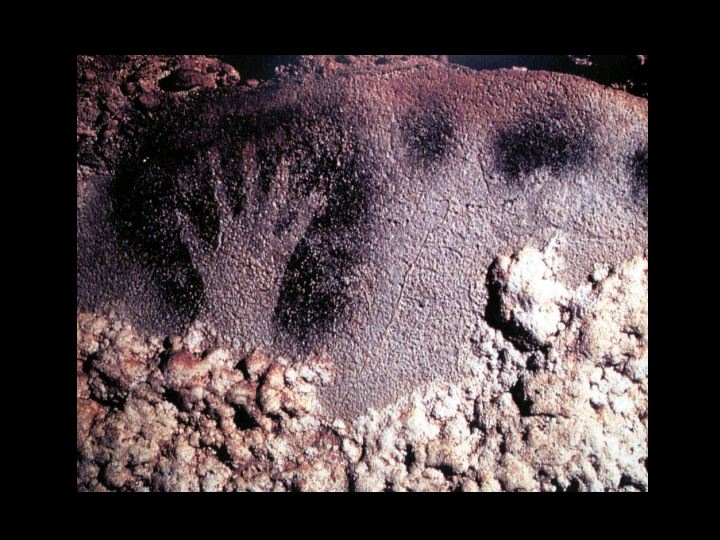
 It's almost as if the leaves knew that their organic form becomes dust but that by sketching themselves on the pavement, they achieve momentary eternity.
 Their ghostly outlines are heartbreaking in their perfection, in their promise.
 I always thought New England falls were the best. But I have to say that Fall in Ohio is just as breathtaking.
 As winter approaches, colors merge and greens and oranges and yellows blend into browns and purples and blacks.
 Soon, the feast of colors will be over and we'll face the return of the long, long winter.
Subscribe to:
Posts (Atom)